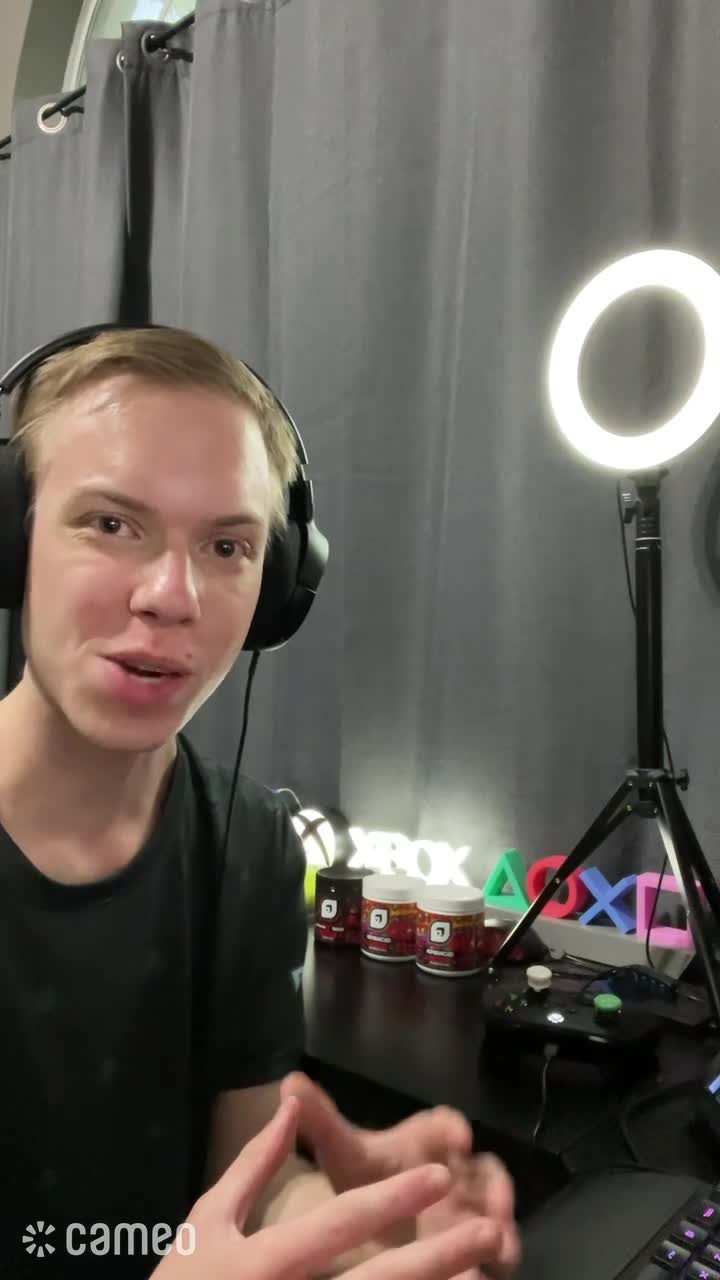

From the Mixer era to Twitch, Paladins community leadership, creator campaigns, and major gaming events, Tyler Michalak has built his identity less around competitive dominance than around conversation, accessibility, and staying connected to the players around him.
Gaming careers are often measured in numbers.
Followers.
Viewers.
Tournament wins.
Rankings.
Hours watched.
But some careers are easier to understand through relationships than statistics.
Tyler Michalak, known online as “tcmich31,” belongs to that category.
His public history stretches across more than a decade of gaming communities and several generations of livestreaming platforms. He has streamed on Mixer, rebuilt his presence on Twitch, represented Xbox players within the Paladins community, participated in creator programs connected with major publishers, appeared within convention and gaming-event ecosystems, and continued expanding into variety content.
Through all of those transitions, one element has remained unusually consistent.
Conversation.
Michalak currently uses the word “Conversationalist” as part of his public creator identity.
It is a deceptively simple description.
It may also be the most accurate explanation of what separates his career from the conventional image of the high-skill competitive streamer.
For tcmich31, games are important.
The people around them are just as important.
A Gaming Identity That Predates the Modern Creator Economy
The tcmich31 handle has existed far longer than many contemporary streaming brands.
His Twitch account dates back to 2013, placing the identity within an earlier phase of livestreaming—before short-form clips, creator programs, algorithmic discovery, and multiplatform personal branding became standard expectations for gaming personalities.
The gaming ecosystem looked different then.
Twitch was still becoming mainstream.
YouTube gaming personalities were expanding rapidly.
Esports had momentum, but the broader concept of the “content creator” had not yet solidified into the professional category it is today.
Over the following decade, almost every major component of the industry would change.
Platforms appeared.
Platforms disappeared.
Games rose and fell.
Streaming technology became more accessible.
Publishers began building formal creator programs.
And audiences increasingly expected gaming personalities to exist simultaneously across livestreams, social media, Discord communities, short-form video, events, and brand collaborations.
Michalak’s career evolved alongside those changes.
The Mixer Years
Before Twitch became the central platform associated with his current work, Michalak streamed on Mixer.
Microsoft’s livestreaming service represented one of the most ambitious attempts to compete directly with Twitch.
For many creators, Mixer offered an alternative ecosystem with its own audiences, community culture, and opportunities.
Then Microsoft shut it down in 2020.
The closure forced thousands of streamers to confront a difficult reality of digital careers:
the platform underneath a creator’s business can disappear even when the creator has done nothing wrong.
A channel is not necessarily an asset if someone else owns the infrastructure.
Followers do not automatically transfer.
Discovery algorithms do not move with the creator.
Community habits have to be rebuilt.
Michalak still describes himself publicly as a former Mixer streamer, making that period an explicit part of his identity rather than something erased from the résumé.
That matters.
The transition from Mixer to other platforms represents one of the most important tests in his career.
He had to keep the creator identity alive after the platform associated with it disappeared.
Rebuilding on Twitch
Twitch became a major part of that reconstruction.
The tcmich31 account developed into an Affiliate channel and, by 2026, had grown to several thousand followers.
But the more interesting evolution was not simply numerical.
Michalak’s content increasingly reflected the type of creator he had become.
Gaming remained the foundation, but the stream itself was not organized purely around elite performance.
His current branding emphasizes conversation.
His game rotation has ranged across titles including Call of Duty, THE FINALS, Paladins, SMITE 2, Warzone, and other variety releases.
That diversity makes sense for a personality-led channel.
The audience does not necessarily need the same game every night if the creator is the consistent element.
The relationship becomes the product.
Why Paladins Matters
Among all of the games associated with Michalak, Paladins occupies a particularly important place.
The hero shooter did more than provide stream content.
It became the environment in which his role expanded from player to recognized community representative.
In 2022, Michalak joined the game’s Assembly of Champions as an Xbox representative.
The distinction is significant.
The Assembly was designed as a bridge between the Paladins player community and the development team.
Representatives were expected to communicate community sentiment, participate in discussions, surface player concerns, and provide feedback on issues affecting the game’s direction.
That meant Michalak was no longer merely talking about a game to an audience.
He had entered a structure intended to bring that audience’s concerns closer to the people developing it.
From Player to Representative
The Assembly of Champions reveals something fundamental about the tcmich31 identity.
His public role developed around community participation rather than esports competition.
There is an important difference.
An esports competitor builds credibility by defeating other players.
A community-oriented creator builds credibility by understanding them.
That requires another set of skills.
Listening.
Communicating.
Recognizing recurring frustrations.
Separating a temporary complaint from a structural issue.
Explaining developer decisions without becoming a spokesperson for them.
Representing players without pretending every player agrees.
Those responsibilities are less visible than tournament results.
They are also increasingly important in modern live-service games.
Publishers depend on sustained communities.
Creators often become the informal communication layer between those communities and the companies maintaining the games.
Michalak’s Assembly role placed him directly inside that dynamic.
Recognition From the Paladins Community
His involvement also produced formal community recognition.
During the same broader period, tcmich31 appeared among nominees in two categories of the Paladins Crystal Awards:
Community Member of the Year
and
Rising Star.
He did not win the categories, but the nominations are important because they demonstrate recognition beyond self-description.
They show that his visibility within the community had become significant enough to be acknowledged through the game’s own community-award ecosystem.
For a creator whose identity depends heavily on interaction, that kind of recognition arguably says more than a leaderboard placement would.
Paladins, SMITE, and the Hi-Rez Ecosystem
Michalak’s gaming identity also developed within the broader Hi-Rez Studios ecosystem.
His public branding has referenced both Paladins and SMITE, and later streams included SMITE 2.
The connection makes sense.
Both games rely on persistent player communities rather than one-time single-player audiences.
That environment rewards creators who can remain part of an ongoing conversation.
A new balance patch becomes content.
A character change becomes discussion.
A community controversy becomes a stream topic.
A development update creates another point of engagement.
For a creator whose identity is built around conversation, live-service games offer a natural home.
Moving Beyond a Single Publisher
Eventually, however, Michalak’s creator activity extended beyond Hi-Rez.
One of the clearest examples came through Ubisoft.
His Twitch channel appeared in official materials connected with XDefiant Partner Twitch Drops, placing him within a structured publisher creator campaign.
That is a meaningful step in a creator’s development.
Publisher programs serve several purposes.
They help games reach established audiences.
They reward creators for coverage.
And they create networks of personalities who can help turn launches, seasons, updates, and events into conversations.
For the creator, participation signals something equally important:
the channel has become visible enough to enter the publisher’s promotional ecosystem.
A Cyberpunk Creator Campaign
Michalak also appeared in an official creator initiative tied to CD PROJEKT RED’s Cyberpunk 2077: Phantom Liberty.
His tcmich31 channel was included in the campaign’s Support-a-Streamer creator selection.
Again, the significance is not that this transformed him into a celebrity overnight.
It is that his creator résumé was expanding across companies and genres.
Paladins.
SMITE.
XDefiant.
Cyberpunk 2077.
Call of Duty.
THE FINALS.
The common denominator was becoming less about one game and more about the creator identity itself.
From Online Channel to Physical Gaming Spaces
Digital creators eventually face another test.
Can an identity built online translate into physical gaming culture?
Michalak’s public activity increasingly suggests that answer has been yes.
He appeared in the DreamHack Dallas 2023 Creator Hub, placing him inside one of gaming’s major event environments.
DreamHack sits at the intersection of esports, streaming, LAN culture, creators, hardware, communities, and entertainment.
For creators, participating in these events changes the relationship with audiences.
Usernames become faces.
Chat messages become conversations.
Online collaborators become people standing in the same room.
The creator economy becomes physical.
Michalak’s involvement in events such as DreamHack reflects a broader evolution from channel owner to participant in gaming culture beyond the screen.
QuakeCon and the Community Side of Events
That development continued with QuakeCon 2026.
Michalak streamed around the event and participated in activity connected with Dallas Pets Alive.
The charity element is worth noting because it reflects another common evolution in creator culture.
Once a streamer has an audience, that audience can become useful for more than entertainment.
It can direct attention toward causes.
Gaming events increasingly incorporate charity fundraising, community organizations, adoption initiatives, and local partnerships.
Creators become distribution points for those efforts.
Michalak’s QuakeCon activity fits naturally with the community-oriented identity visible elsewhere in his career.
The Technical Work Nobody Sees
Livestreaming often looks deceptively simple from the audience side.
A creator sits down.
A game appears.
The stream begins.
Behind that experience is a technical system that can fail in dozens of ways.
Capture cards.
OBS.
Encoding.
Bitrate.
Graphics drivers.
Audio routing.
Cameras.
Microphones.
Lighting.
Networking.
Storage.
Frame drops.
Console compatibility.
Michalak’s public history includes something many polished creator biographies leave out:
the troubleshooting.
Over the years, he has publicly sought help for OBS issues, capture-card setups, encoding problems, and gaming hardware performance.
Those records are mundane.
They are also authentic.
A decade-long streaming career is not only sponsorship announcements and convention appearances.
It is figuring out why the stream is dropping frames at two in the morning.
It is moving software docks back into place.
It is testing hardware.
It is updating drivers.
It is solving problems audiences never know existed.
That invisible labor is part of the creator profession.
Gaming as Conversation
The word “Conversationalist” becomes more meaningful when viewed against this entire history.
Michalak is not primarily selling the fantasy that he is the best player in the room.
His value proposition is closer to:
Come into the room.
Talk.
Watch the game.
Discuss the update.
React to the industry.
Share an opinion.
Stay for the community.
That type of creator can sometimes be harder to summarize because the product is not a single measurable skill.
It is atmosphere.
The best community streamers create rooms people want to return to.
Gaming provides structure.
Conversation provides continuity.
A Multiplatform Identity
Like most long-term creators, Michalak’s public presence has spread beyond one service.
His ecosystem has included:
Twitch.
Kick.
Facebook Gaming.
YouTube VODs.
Short-form video.
Discord.
Social platforms.
Cameo.
Affiliate storefronts.
That expansion is partly defensive.
The Mixer shutdown demonstrated what happens when too much of a career depends on one company.
Multiplatform distribution reduces that risk.
But it also reflects how modern creator audiences behave.
A viewer may watch a Twitch stream one night, see a TikTok clip the next morning, join a Discord conversation later that afternoon, and encounter the creator again through a gaming event.
The “channel” becomes an ecosystem.
The Business Around the Stream
Michalak’s public creator infrastructure has also included affiliate and brand relationships.
His link hub has promoted partnerships or affiliate programs involving gaming and lifestyle brands such as ADVANCEDgg, alongside other creator-oriented products and services.
He has also participated in the OBSBOT Creator Program, where Streams Charts publicly identified him by both his handle and full name, Tyler Michalak.
These relationships represent another stage in creator development.
A streamer begins by making content.
Eventually, content becomes connected with commerce.
Affiliate codes.
Creator campaigns.
Hardware.
Merchandise.
Storefronts.
Brand activations.
The challenge is maintaining audience trust while building sustainable revenue.
For community-oriented creators especially, that balance matters.
The audience has to believe that the relationship is still more important than the advertisement.
Why His Career Is Not an Esports Story
There is a temptation to categorize every gaming personality according to competitive achievement.
That would misunderstand Michalak’s path.
He is not best framed as an aspiring professional player who happened to stream.
His documented career points toward something different.
He became valuable through participation.
He joined communities.
Represented players.
Talked to developers.
Entered publisher creator programs.
Appeared at events.
Expanded across platforms.
Maintained a long-term audience identity.
Those are creator-economy achievements rather than esports achievements.
And that distinction matters because gaming culture has grown far beyond competition.
Millions of people now engage with games through personalities who may never compete professionally.
Some explain.
Some entertain.
Some review.
Some teach.
Some organize communities.
Some simply create a place where people like spending time.
Michalak’s career fits most clearly within that final group.
Surviving the Platform Cycle
Perhaps the most revealing part of his story remains the Mixer transition.
Digital careers can appear permanent while they are happening.
A platform dominates.
A community forms.
Creators optimize around it.
Then the platform changes—or disappears.
Mixer’s shutdown was a reminder that creators do not own the environments in which they build.
Michalak’s continued activity years later matters precisely because of that.
He carried the identity forward.
The platform disappeared.
The creator did not.
That may be one of the clearest measures of resilience in online media.
Still Evolving
By 2026, tcmich31’s content had broadened considerably.
Call of Duty had become increasingly visible.
THE FINALS appeared in the rotation.
Paladins and SMITE still connected him to his earlier creator history.
Event activity continued.
Short-form and multiplatform content remained part of the broader strategy.
The evolution suggests a creator increasingly comfortable allowing his audience to follow him, rather than requiring the audience to follow one particular game.
That is an important threshold.
Games eventually decline.
Servers shut down.
Metas change.
Sequels arrive.
Publishers pivot.
A sustainable creator identity cannot depend entirely on a single title.
The Value of Being the Person People Can Talk To
Tyler “tcmich31” Michalak’s career offers a useful reminder about what influence inside gaming communities can actually look like.
It does not always require enormous numbers.
It does not require trophies.
It does not require becoming the loudest person online.
Sometimes influence develops through consistency.
Being present.
Answering questions.
Listening to complaints.
Showing up at events.
Participating in community structures.
Talking directly with players.
And building enough credibility that publishers and community organizations begin inviting the creator into larger conversations.
Michalak’s public history—from Mixer to Twitch, from Paladins streams to the Assembly of Champions, from community-award nominations to Ubisoft and CD PROJEKT RED creator campaigns—reflects that kind of progression.
He did not build the identity around being unbeatable.
He built it around being accessible.
A Creator Between Players and Publishers
The most interesting way to understand tcmich31 may therefore be as a person occupying the space between several parts of modern gaming.
Between players and developers.
Between audiences and publishers.
Between livestreaming and in-person events.
Between one platform and the next.
Between playing a game and helping sustain the community around it.
That position is increasingly important.
Modern games are no longer simply products released and forgotten.
They are services surrounded by Discord servers, patch notes, creator ecosystems, livestreams, conventions, social media, communities, and years of continuing conversation.
People like Michalak operate inside that conversation.
Sometimes as players.
Sometimes as streamers.
Sometimes as representatives.
Sometimes simply as the person keeping chat moving while everyone else plays along.
And after more than a decade associated with the tcmich31 name, that consistency may be the clearest description of the career:
the platform changed, the games changed, and the creator kept the conversation going.