
Abraham Lincoln entered the presidency at a moment when the United States was already coming apart.
Elected in 1860, Lincoln took office on March 4, 1861. By then, seven Southern states had declared their secession and formed the Confederate States of America. After Confederate forces fired on Fort Sumter in April, four additional slaveholding states joined the Confederacy, and the country entered a civil war that would define Lincoln’s presidency.
Lincoln’s administration would confront questions that reached far beyond military strategy. Could the Union survive? What powers could a president exercise during rebellion? What would happen to slavery? And if the United States remained intact, what kind of country would emerge from the conflict?
Those questions make Lincoln’s presidency consequential not because every decision was simple or universally supported, but because the war forced fundamental disputes about union, slavery, citizenship and presidential power into the center of national life.
A Presidency That Began With Secession Already Underway
Lincoln did not enter the White House and then watch sectional disagreement gradually become war. Secession was already in progress before his inauguration.
His election intensified a political crisis that had developed over slavery and, particularly, whether slavery would be permitted to expand into western territories. The Republican platform opposed the extension of slavery into the territories, although Lincoln had not campaigned in 1860 on a program of immediately abolishing slavery where it already existed.
The crisis became military after the confrontation at Fort Sumter in Charleston Harbor. Once fighting began, Lincoln’s immediate public objective was preservation of the Union. The National Archives notes that the North initially fought to prevent Southern secession rather than with abolition as its declared war aim, even though slavery had been a major cause of the sectional conflict.
That distinction is important because Lincoln’s policies toward slavery changed substantially as the war developed.
Lincoln’s Position on Slavery Was Firm in Principle but Evolving in Policy
The original version of Lincoln’s story is sometimes reduced to a simple description of a president who entered office determined to abolish slavery immediately.
The historical record is more complicated.
Lincoln personally opposed slavery. The Library of Congress documents that he regarded slavery as morally wrong, but he also believed that the Constitution limited what he could accomplish through presidential authority alone. He was particularly concerned about maintaining the loyalty of slaveholding border states that had remained in the Union.
War gradually changed the legal, military and political circumstances.
Enslaved people escaped to Union lines. Congress passed confiscation legislation. Congress abolished slavery in the District of Columbia in 1862. Federal law also prohibited slavery in United States territories. These developments increased pressure on the administration to determine what emancipation would mean as a military policy.
Lincoln eventually concluded that emancipation in areas under rebellion could be justified as a military measure necessary to suppress the Confederacy. He presented a draft proclamation to his cabinet in July 1862 and delayed its public release until after the Union’s strategic success at Antietam.
The Emancipation Proclamation Changed the War, but It Did Not Abolish Slavery Everywhere
Lincoln issued the preliminary Emancipation Proclamation on September 22, 1862. The final proclamation took effect on January 1, 1863. It declared enslaved people in designated areas still in rebellion against the United States to be free.
Its limits matter.
The proclamation did not free enslaved people in loyal border states, and it exempted some areas of the Confederacy already under Union control. Its practical reach also depended on Union military advances. It therefore did not abolish slavery throughout the United States by itself.
Its effects were nevertheless substantial. The proclamation changed the character of the Union war effort by formally connecting preservation of the Union with emancipation. It also authorized Black men to serve in the United States armed forces. By the end of the conflict, approximately 180,000 African American men had served in the Union Army and another 18,000 in the Navy, according to the Library of Congress.
The final constitutional abolition of slavery came through the 13th Amendment.
Congress approved the amendment on January 31, 1865. Lincoln supported its passage, but he did not live to see its ratification. The required number of states ratified it on December 6, 1865, almost eight months after his death.
A Cabinet Filled With Political Competitors
Another distinctive aspect of Lincoln’s presidency was the composition of his cabinet.
The familiar phrase “team of rivals” captures part of the story, although Lincoln did not simply appoint members of the opposing political party to guarantee that every issue would have two sides represented.
Instead, he brought several major Republican competitors and factional leaders into the administration. William H. Seward, Salmon P. Chase, Edward Bates and Simon Cameron had all competed against Lincoln for the 1860 Republican presidential nomination.
These were ambitious political figures with substantial disagreements of their own. The Library of Congress describes Lincoln’s cabinet as a combination of former rivals and allies representing competing factions of the Republican Party.
Managing those personalities became part of Lincoln’s wartime leadership. Seward served as secretary of state, Chase as secretary of the Treasury, and later Edwin Stanton became secretary of war. The cabinet debated military policy, emancipation and other major questions facing the administration.
Preserving the Union Required Difficult Wartime Decisions
Lincoln’s role as commander in chief extended into areas where presidential authority became controversial.
The National Park Service notes that he exercised extraordinary wartime powers, including martial law measures and suspension of habeas corpus in certain circumstances. His administration also struggled repeatedly with military leadership before Ulysses S. Grant became general in chief in 1864.
These actions remain important to historical debate about presidential authority during emergencies. They are part of Lincoln’s record alongside emancipation and preservation of the Union, rather than details that disappear because the Union eventually prevailed.
The war itself also imposed enormous human and economic costs on both Union and Confederate communities. By 1865, much of the South had suffered extensive destruction, millions of enslaved people were moving toward freedom, and the country faced the enormous political problem of restoring states that had rebelled while defining the legal status of formerly enslaved Americans.
Lincoln Began to Address Reunion but Did Not Live to Direct Reconstruction
By the beginning of Lincoln’s second term, Confederate defeat appeared increasingly likely.
In his Second Inaugural Address on March 4, 1865, Lincoln spoke less about victory than about slavery, responsibility for the war and the challenge of national reconciliation. The National Park Service describes the speech as an attempt to move a divided country toward healing rather than retaliation.
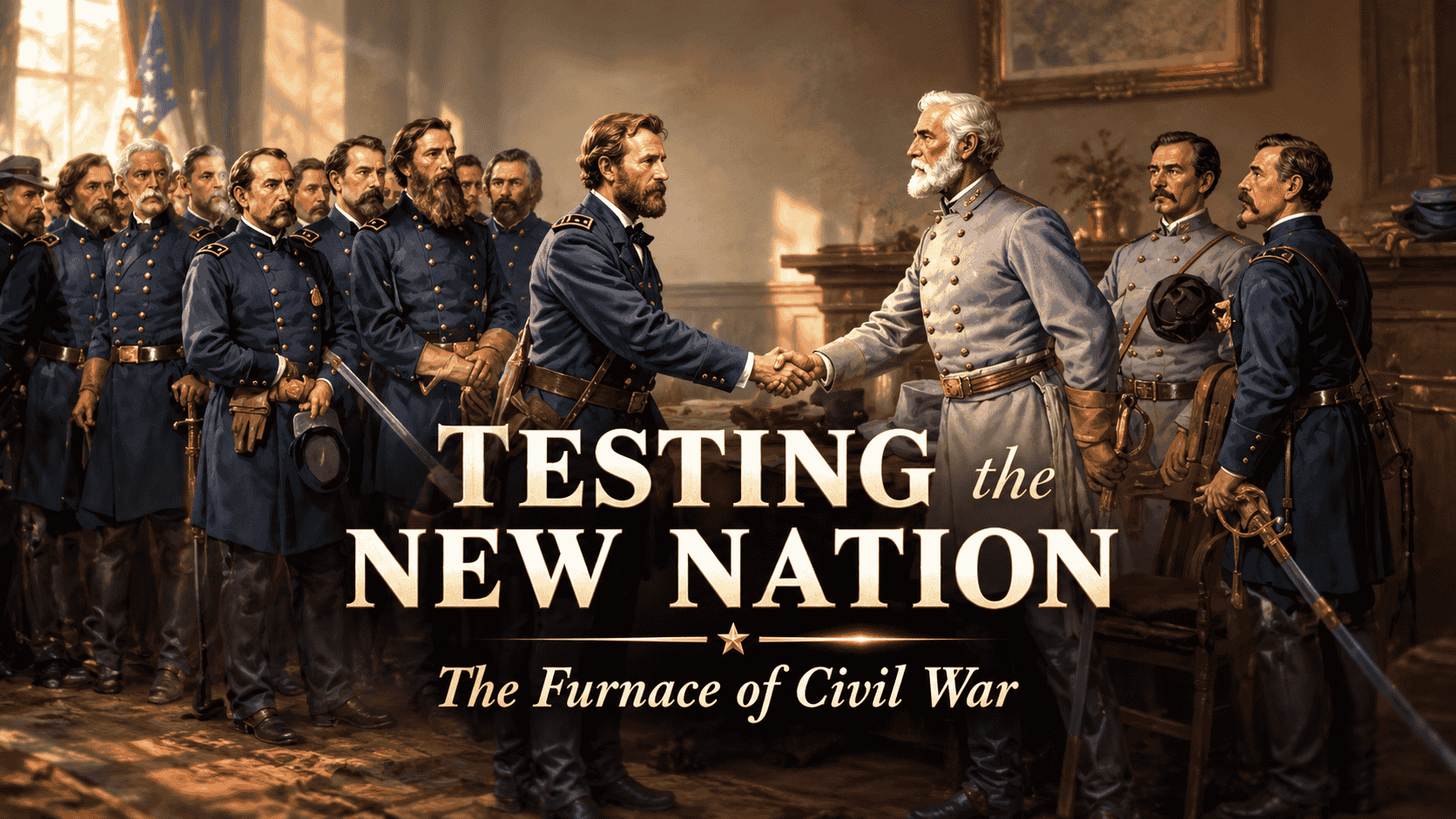
The Confederate Army of Northern Virginia surrendered to Ulysses S. Grant at Appomattox Court House on April 9, 1865. Five days later, on April 14, John Wilkes Booth shot Lincoln at Ford’s Theatre in Washington. Lincoln died the following morning, April 15, at the Petersen House across the street.
His death meant that he did not direct the Reconstruction era that followed the war.
That point corrects an important misconception. Lincoln did not oversee passage of the 14th and 15th Amendments.
The 14th Amendment was passed by Congress in 1866 and ratified in 1868. Among its central provisions were national citizenship, due process and equal protection. The 15th Amendment was passed by Congress in 1869 and ratified in 1870, prohibiting denial of voting rights on the basis of race, color or previous condition of servitude. Both measures belong to the Reconstruction period after Lincoln’s death.
Lincoln’s Legacy Became Bound to Both Union and Emancipation
Lincoln’s historical legacy developed around several interconnected elements: preservation of the United States during secession and civil war, the transformation of Union policy toward emancipation, support for the constitutional abolition of slavery, and his language about equality and reunion.
His own thinking and policies did not remain frozen between his election in 1860 and his death in 1865. The Library of Congress describes an evolution in his approach to emancipation as military events, congressional action and constitutional questions changed the choices available to his administration.
That evolution is more historically revealing than portraying the presidency as a sequence of inevitable decisions.
The Lincoln Memorial in Washington reflects the national memory that developed after his assassination. Congress spent decades considering how Lincoln should be commemorated before construction began in 1914. The memorial was dedicated on May 30, 1922. Inside are inscriptions of the Gettysburg Address and the Second Inaugural Address, connecting the monument directly to Lincoln’s wartime language about equality, union, sacrifice and reconciliation.
Lincoln’s presidency lasted only from March 1861 until April 1865, but those four years encompassed secession, civil war, emancipation, constitutional change and the beginning of a national struggle over what freedom would mean after slavery.
Understanding that presidency requires more than celebrating a symbol. It requires examining the difficult sequence of decisions through which preserving the Union and confronting slavery became inseparable parts of the country’s wartime transformation.