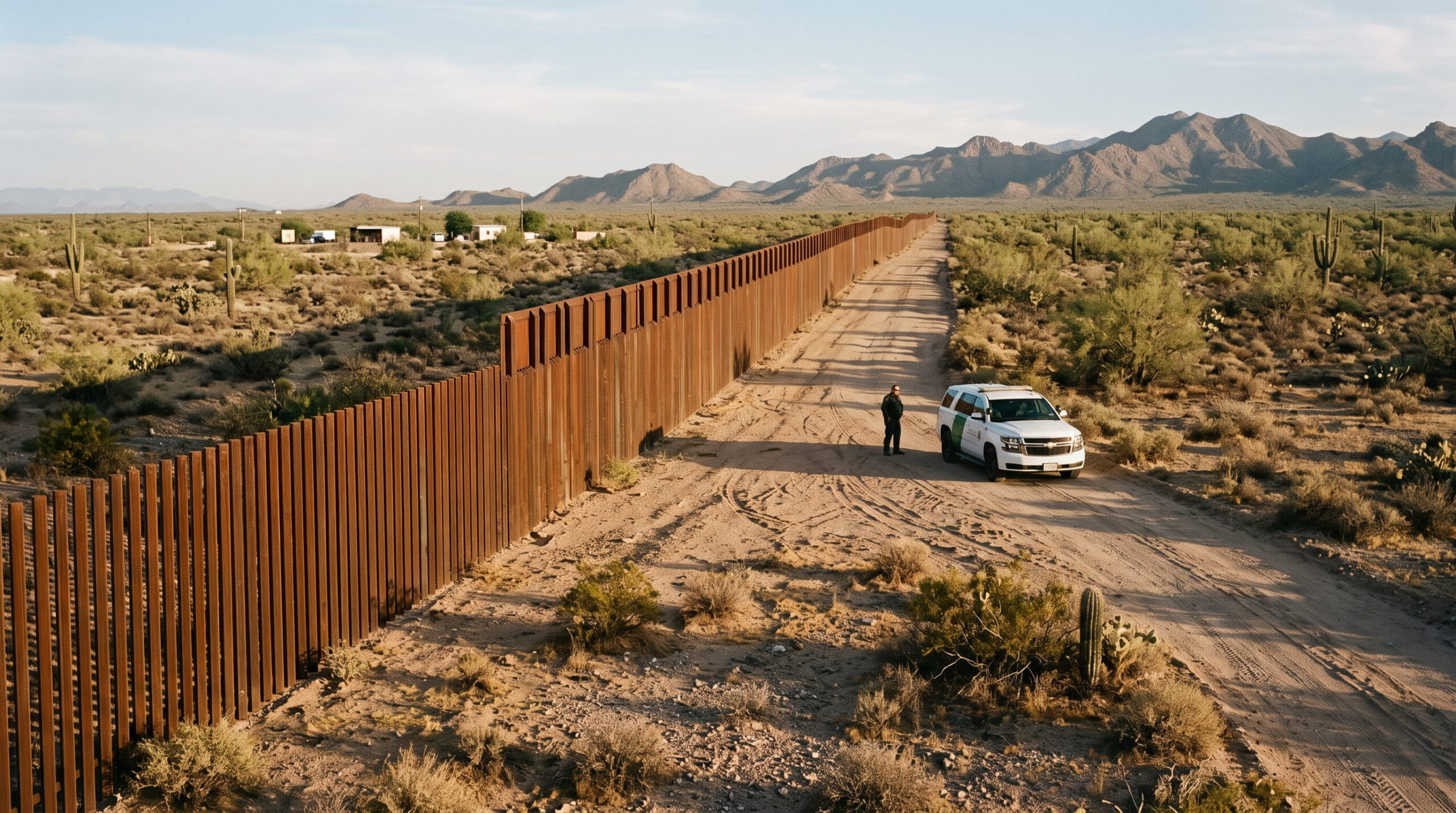

Immigration is one of the most consequential and emotionally charged issues in American politics, but it is also one of the easiest subjects to distort with outdated numbers, sweeping assumptions, and statistics that measure different things.
The southern border presents legitimate questions about law enforcement, government spending, public services, asylum processing, national security, and the capacity of communities to absorb rapid population changes. Those questions deserve serious scrutiny. They also deserve accurate numbers.
A claim that a fixed number such as 741,000 people illegally enter the United States through the Mexican border every year does not accurately describe modern migration patterns. Border activity changes dramatically from one year to another, and federal statistics distinguish between Border Patrol apprehensions between ports of entry and other encounters at official ports.
Department of Homeland Security data show approximately 2.48 million southwest border encounters in fiscal year 2023 and about 2.14 million in fiscal year 2024. By June 4, 2025, the fiscal year 2025 total reported in a DHS inspector general review stood at roughly 405,000. Those figures are encounters, not a count of unique people who successfully entered and remained in the country.
The scale of migration therefore matters, but so does the terminology used to describe it.
The Southern Border Is No Longer Primarily a Mexican Migration Story
Another major change is who is arriving.
Mexico remains the single largest country of origin among unauthorized immigrants living in the United States, but Mexicans are no longer a majority of that population. Pew Research Center estimated that about 14 million unauthorized immigrants lived in the United States in 2023. Approximately 4.3 million were born in Mexico, representing about 30 percent of the total.
That is a major departure from earlier decades, when Mexican nationals accounted for most of the unauthorized immigrant population.
The broader immigrant population tells a similar story. More than 11 million U.S. residents were born in Mexico as of 2023, but this group includes naturalized citizens, lawful permanent residents, other legally present immigrants, and unauthorized residents. It is therefore inaccurate to treat the Mexican born population as synonymous with illegal immigration.
Mexico itself had a population of roughly 132 million in 2025. That also means claims that more than 11 percent of Mexico’s population now lives in the United States are not supported by current population figures.
The Fiscal Cost Is Real, but the Picture Changes Depending on Which Government Pays
Immigration can create substantial expenses for state and local governments, especially when arrivals increase quickly.
The Congressional Budget Office examined the immigration surge that began in 2021 and estimated that, in 2023, state and local governments collected an additional $10.1 billion in taxes associated with the surge while spending an additional $19.3 billion. The result was an estimated direct net cost of $9.2 billion, equivalent to about 0.3 percent of state and local spending after federal grants were excluded. Major cost categories included elementary and secondary education, shelter and related services, and border security.
That finding gives substance to concerns from cities, counties, school systems, and border communities that sudden migration can place pressure on local budgets.
The federal picture, however, is different.
CBO projected that the broader immigration surge would increase federal revenues by about $1.2 trillion from 2024 through 2034 while increasing mandatory spending and interest costs by about $300 billion. On that basis, CBO projected a net reduction in federal deficits of roughly $900 billion over the period. The agency emphasized that its estimates contain significant uncertainty and that the population it analyzed includes people with different immigration statuses.
Both findings can be true at the same time. Immigration can impose net costs on some state and local governments while increasing federal tax revenue enough to produce a different fiscal result at the national level.
The Claim That Unauthorized Immigrants Do Not Pay Taxes Is Too Broad
One of the most persistent claims in the immigration debate is that unauthorized immigrants receive government services while contributing little or nothing in taxes.
Federal tax law does not support that characterization.
The Internal Revenue Service states explicitly that undocumented workers are subject to U.S. taxes despite their immigration status. Payments to undocumented workers are subject to tax withholding and reporting requirements. The IRS also issues Individual Taxpayer Identification Numbers to people who have federal tax obligations but are not eligible for Social Security numbers.
Payroll taxes can also apply to wages earned in the United States regardless of citizenship or residence, subject to specified exceptions.
None of this means that every unauthorized worker fully complies with tax law. Some employment occurs in the underground economy, and CBO has acknowledged that immigrants working without authorization are less likely than the broader population to comply fully with income tax requirements. But the opposite claim, that unauthorized immigrants generally pay no taxes, is also inaccurate.
Schools Do Face Language Costs, but English Learner Programs Have a Specific Purpose
Immigration has also changed the linguistic composition of many American schools.
National Center for Education Statistics data show that about 5.3 million public school students were classified as English learners in fall 2021, representing 10.6 percent of public school enrollment. Spanish was the home language reported for about 4 million of those students.
The effect is particularly visible in several border and western states. English learners represented about 20.2 percent of public school students in Texas and 18.9 percent in California in the same data.
Those numbers can create additional instructional and financial demands on school districts. CBO has identified elementary and secondary education as one of the major state and local costs associated with the recent immigration surge.
But describing these programs as forcing American children to learn in Spanish misstates their purpose.
Federal civil rights requirements direct schools to address language barriers so English learners can participate meaningfully in educational programs. The Department of Education says language programs must be based on a sound educational approach, and NCES describes these services as programs intended to help students develop English proficiency while meeting academic standards.
English learner status also does not establish that a student or the student’s parents are in the country illegally.
Health Care Has Costs, but Eligibility Is More Restricted Than Many Assume
Health care is another area where the details matter.
Federal Medicaid eligibility generally requires U.S. citizenship or qualifying immigration status. Federal rules also allow limited Medicaid payment for treatment of emergency medical conditions for certain people who are otherwise ineligible for full benefits because of immigration status.
Individual states may use their own funds to provide additional coverage to certain immigrant populations, so the financial impact can differ substantially by jurisdiction.
It is therefore reasonable to study how migration affects hospitals, emergency departments, insurance systems, and state budgets. It is not accurate, however, to assume that every unauthorized immigrant receives the same health benefits available to citizens or legally eligible residents.
Remittances to Mexico Are Enormous, but They Are Not an Accounting of Unauthorized Immigrant Earnings
Money sent abroad is another legitimate economic consideration.
The World Bank estimated that Mexico received approximately $68 billion in remittances in 2024, making it one of the world’s largest recipients. Banco de México data also show tens of billions of dollars flowing from the United States to Mexico each year.
What those numbers do not show is that the money was sent exclusively by unauthorized immigrants.
Remittance statistics include transfers from people with many different legal statuses, including U.S. citizens, permanent residents, temporary workers, and unauthorized residents. They also do not establish that senders contribute nothing to local economies. People living in the United States ordinarily pay for housing, food, transportation, utilities, sales taxes, and other domestic expenses before sending a portion of their income abroad.
Remittances are economically significant, but using the total amount sent to Mexico as a proxy for money removed from the American economy by unauthorized immigrants produces a conclusion the data cannot support.
Entering Illegally Can Be a Crime, but Unlawful Presence Is Not a New Crime Every Morning
Immigration law also requires more precision than political rhetoric usually provides.
Under 8 U.S.C. Section 1325, entering or attempting to enter the United States at an unauthorized location, avoiding immigration inspection, or obtaining entry through specified forms of deliberate misrepresentation can result in criminal penalties. A first offense can carry imprisonment of up to six months, while subsequent violations can carry greater penalties.
That does not mean every unauthorized immigrant commits a new criminal offense simply by waking up in the United States each day.
Section 1325 criminalizes specified acts connected to improper entry. Immigration status can create grounds for detention, removal, civil penalties, inadmissibility, or other legal consequences, but the claim that every person without lawful status is committing a fresh federal crime every day is not what the statute says.
The distinction also matters because not every unauthorized immigrant entered by crossing the border illegally. Some people entered legally and later remained after their authorized period expired. Pew includes both groups in its estimates of the unauthorized population.
Border Security and Terrorism Require Evidence, Not Assumptions
A government responsible for controlling an international border must consider national security threats as well as ordinary immigration violations.
Federal authorities screen travelers and migrants against criminal and national security databases. A 2026 Government Accountability Office report, for example, described screening procedures that compared information against systems including the Terrorist Screening Dataset and the National Crime Information Center for certain migrants processed through ports of entry.
That makes terrorism screening a legitimate component of border policy.
An Arabic language book found somewhere near the border, however, does not by itself demonstrate the presence of a terrorist. A language is not evidence of criminal intent. Establishing a terrorism connection requires information about the individual involved, ownership of the object, intelligence records, investigative findings, or other corroborating evidence.
Border security arguments become stronger, not weaker, when national security claims are based on documented threats rather than inference.
The Government Has Enforced Immigration Law, Even When Critics Consider the Response Inadequate
It is fair to argue about whether federal enforcement has been sufficient, consistent, or well designed. It is not accurate to say that the federal government has done almost nothing.
DHS reported more than 685,000 removals and returns in fiscal year 2024, the highest annual level since 2010. Border Patrol activity also changed sharply after policy changes in 2024 and early 2025. By May 2025, Border Patrol reported 8,725 encounters between ports of entry along the southwest border, compared with 117,905 in May 2024.
Those numbers do not settle arguments about what immigration policy should be. They demonstrate that enforcement levels and migration flows can change quickly and that a static picture of the border can become obsolete within months.
Immigration Politics Cannot Be Reduced to Mexican Votes
The argument that elected officials decline to enforce immigration law because unauthorized Mexican immigrants provide votes also confuses citizenship with nationality and immigration status.
Noncitizens, including lawful permanent residents, cannot vote in federal elections. Some jurisdictions permit noncitizen participation in limited local elections, but federal voting requires U.S. citizenship.
Naturalized Americans born in Mexico can vote because they are U.S. citizens, just as naturalized citizens born in any other country can.
Politicians and voters clearly disagree over border enforcement, asylum, legal immigration, deportation, labor needs, humanitarian obligations, and the economic consequences of migration. Those disagreements are real. Assigning a single electoral motive to elected officials across different parties, states, and administrations requires evidence that a broad claim cannot provide.
A Serious Border Debate Does Not Need Exaggeration
Americans can favor tighter border enforcement, stronger immigration courts, greater detention capacity, additional legal immigration pathways, more removals, different asylum standards, or some combination of those policies.
The factual questions come first.
Rapid migration has imposed measurable costs on some state and local governments. Schools and municipal services can experience pressure. Remittances from the United States to Mexico are substantial. Entering the country improperly can violate federal criminal law. Border security agencies have genuine national security responsibilities.
At the same time, unauthorized immigrants do pay taxes, federal benefit eligibility is restricted, modern migration is far more multinational than the Mexican border narrative suggests, and the federal fiscal picture differs from the burden experienced by some local governments.
The southern border is complicated enough without relying on statistics that no longer describe it. Any durable immigration policy has to begin with the numbers as they are, not as political rhetoric makes them appear.